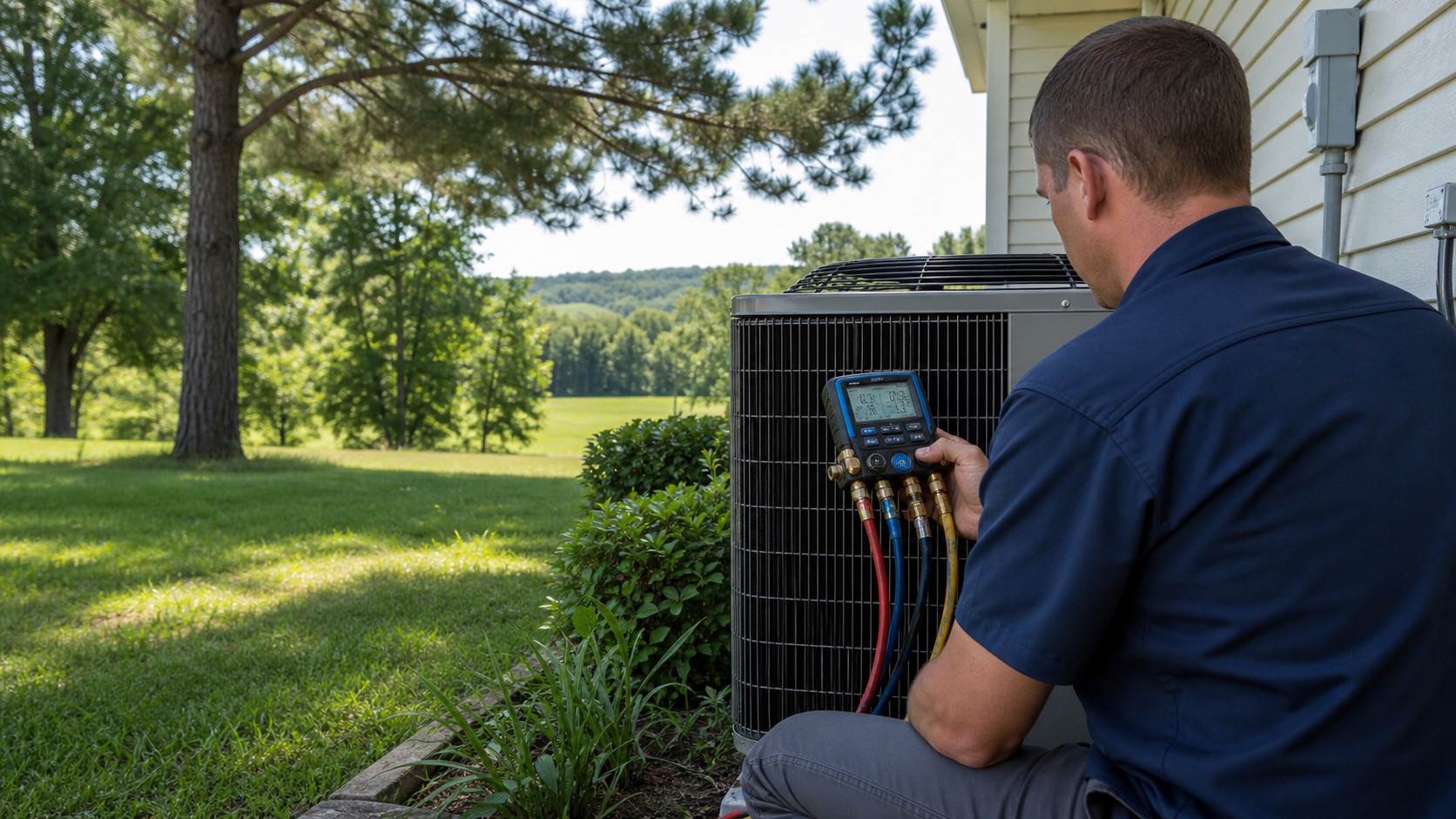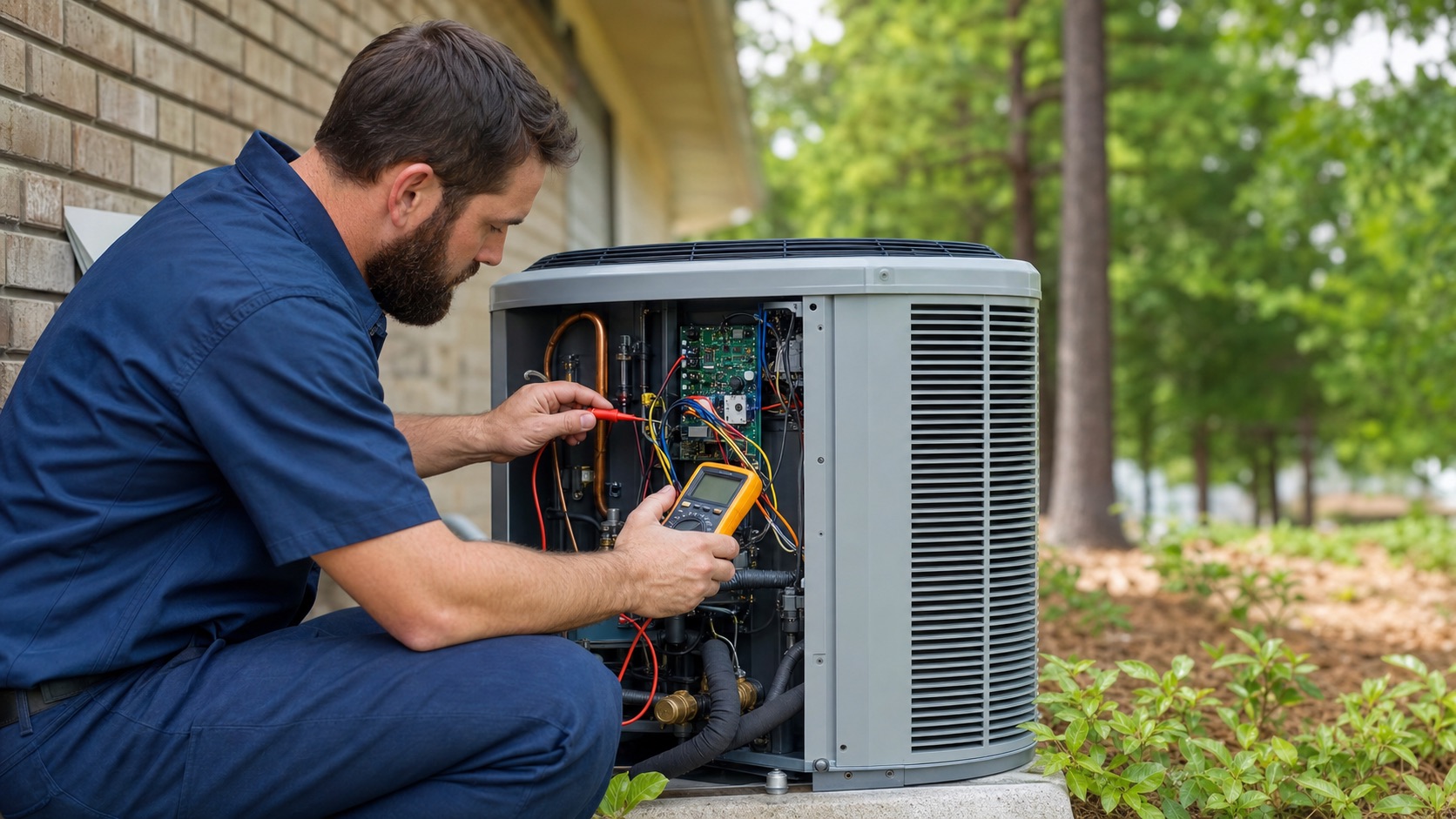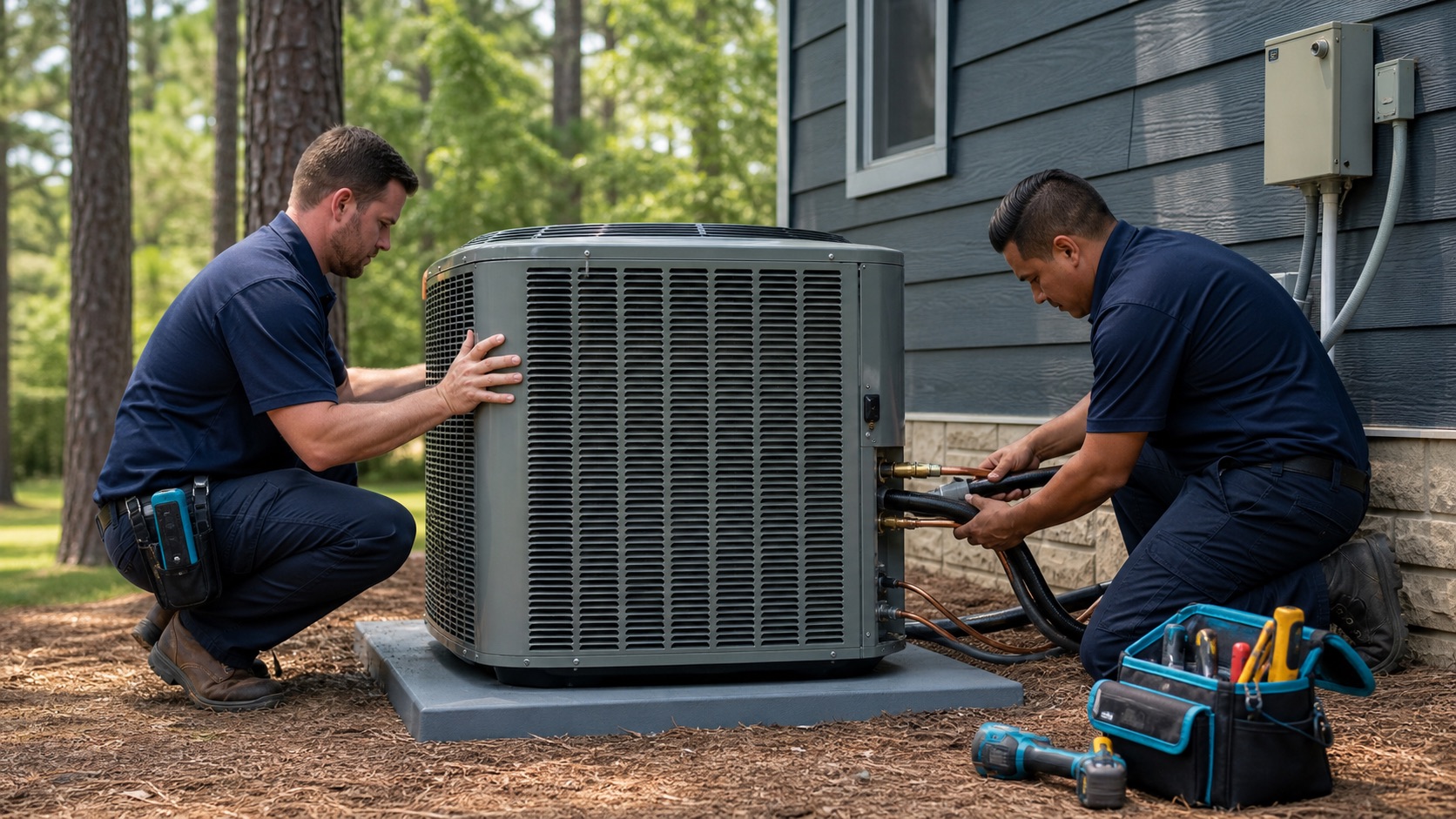
Safety-aware testing
Shutdowns, odors, venting concerns, and combustion equipment are approached carefully.
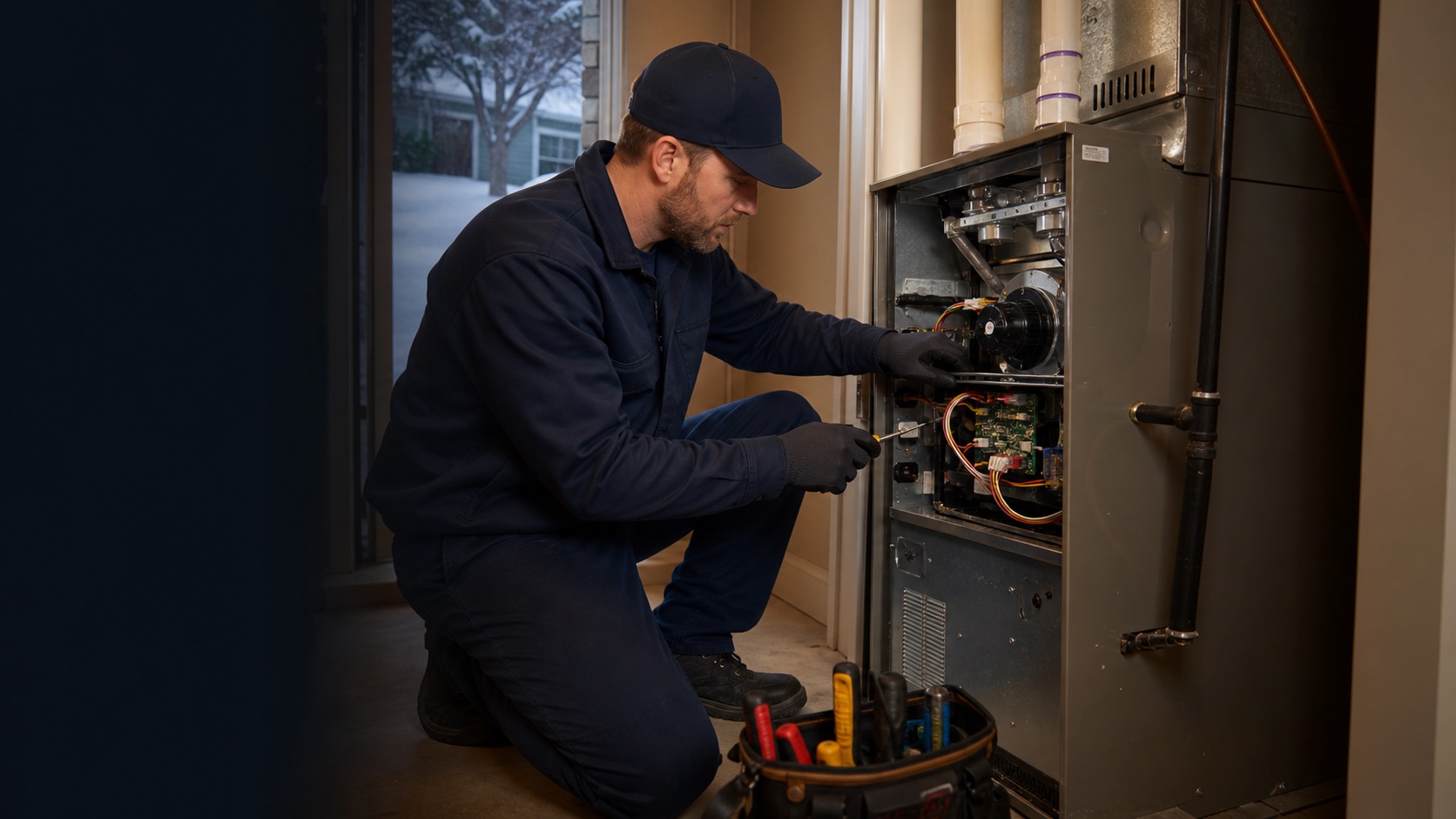
Heating problems deserve careful diagnosis, especially when combustion, electrical controls, airflow, or repeated safety shutdowns may be involved.
Heating repair covers the sequence that lets a furnace or other central system start, produce heat, move air, and shut down safely. Depending on the equipment, diagnosis may include the thermostat, safeties, ignition, flame sensing, electrical components, blower, filter, venting, and temperature rise.
Heating systems in southeastern Oklahoma may sit idle for much of the year, then be expected to start reliably during a fast cold front. Dust buildup, insects, weak electrical components, blocked airflow, and neglected filters can show up at the first real demand for heat.
Shutdowns, odors, venting concerns, and combustion equipment are approached carefully.
The point where operation stops helps isolate controls, ignition, airflow, or power faults.
After approved work, startup, heating response, and cycling are checked.
Every system and property is different. The final recommendation should identify the equipment, approved work, parts or products, access needs, and any exclusions.
Discuss My ProjectParts, materials, and equipment should match the system requirements, approved scope, and applicable manufacturer instructions. Brand availability can vary.
Good service starts before tools come out. Access, symptoms, equipment, safety, and approval are addressed in the right order.
If you smell gas, leave the property and contact the gas utility or emergency services; do not operate switches.
The heating call, safeties, ignition, blower, airflow, and shutdown are checked as the symptom requires.
Approved work is completed and the system is cycled to confirm the response.
Not sure whether this is the right service? Send the form with the property address, system type, symptoms, and project timing so the next step can be confirmed.
Ask about your project →These answers cover common decisions. System-specific recommendations require inspection and testing.
Leave the building, avoid switches or flames, and contact the gas utility or emergency services from a safe location. Do not wait for a routine HVAC appointment.
A dirty flame sensor, airflow restriction, safety-limit event, control problem, or other fault may interrupt the sequence. Repeated resets are not a substitute for diagnosis.
Yes. Settings, batteries, wiring, programming, or a failed thermostat can prevent or interrupt a heating call, but the connected equipment should also be checked when symptoms persist.
Sooner Elite accepts urgent heating calls Monday through Saturday, including overnight hours. Sunday is closed.
Tell Sooner Elite what the system is doing or what you are planning. We will confirm the next step and current availability.